
Not every ventilation problem is a containment problem. An autoclave venting steam, an oven throwing heat, a water bath fogging up the room — none of that needs an enclosed hood with a sash. It needs the heat and vapor pulled up and out before it spreads through the lab.
That is what a canopy hood does.
What a canopy hood is
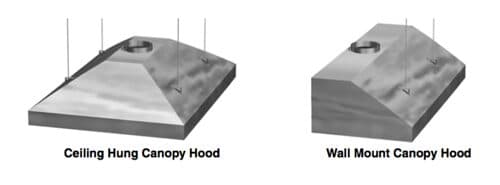
A canopy hood is an overhead capture system installed above the work area. It has no sash and no enclosed workspace. Users stand and work underneath it while heat, steam, and non-toxic vapors rise into the hood and leave through the duct.
Because it is open, it provides exhaust and environmental control — not containment.
Where they fit
Canopy hoods are the standard answer for:
- Ovens, autoclaves, and water baths
- Equipment that generates heat or steam
- Large apparatus that will not fit inside a standard hood
- Open lab areas that need general exhaust
The common thread is that the process is not hazardous, but the heat or vapor it produces is still a problem for the room, the HVAC system, and the people in it.
Where they do not fit
If the work needs containment, a canopy hood is the wrong equipment. Toxic chemistry, solvent handling, and anything with an exposure limit belongs in an enclosed hood such as the F-100 Series bench fume hoods, or in a configuration built around the specific hazard.
Two in-between cases are worth knowing:
- Equipment that must stay accessible. A ventilated enclosure can be built with horizontal sliding doors and sash arrangements that keep equipment reachable for operation, loading, or maintenance, while still exhausting at the point of work.
- A single task that needs capture at the source. A fume extractor with a flexible arm handles localized fumes, vapors, dust, and particulates without dedicating a hood to it.
How they are configured
Canopy hoods are built to suit the equipment and the ceiling above it:
- Ceiling-mounted or wall-mounted configurations
- Standard widths from 36" to 72"
- An approximate 18" height profile for overhead installation
- Depths from roughly 24" to 48", depending on the application
- Painted steel or stainless steel construction, for durability and corrosion resistance
Duct collars, baffles, condensation trays, and hanging hardware round out the installation. Condensation trays matter more than they sound: anything capturing steam will shed water, and it needs somewhere to go other than the equipment below.
Plan it with the exhaust system
A canopy hood only works if the exhaust volume above it is real. Capture depends on the hood being close enough to the source, sized for it, and connected to a fan that can move the air. Mounting height, duct routing, and the exhaust fan all need to be settled with the mechanical engineer rather than assumed — the same coordination any hood requires.
LF Systems has handled laboratory ventilation and casework in Delaware, Maryland, Pennsylvania, and New Jersey since 1983. If you have a piece of equipment making heat or steam and are not sure whether it needs a canopy, an enclosure, or a hood, tell us what it is and we will work through it with you. The fume hood catalog (PDF) has the full model and option list.