
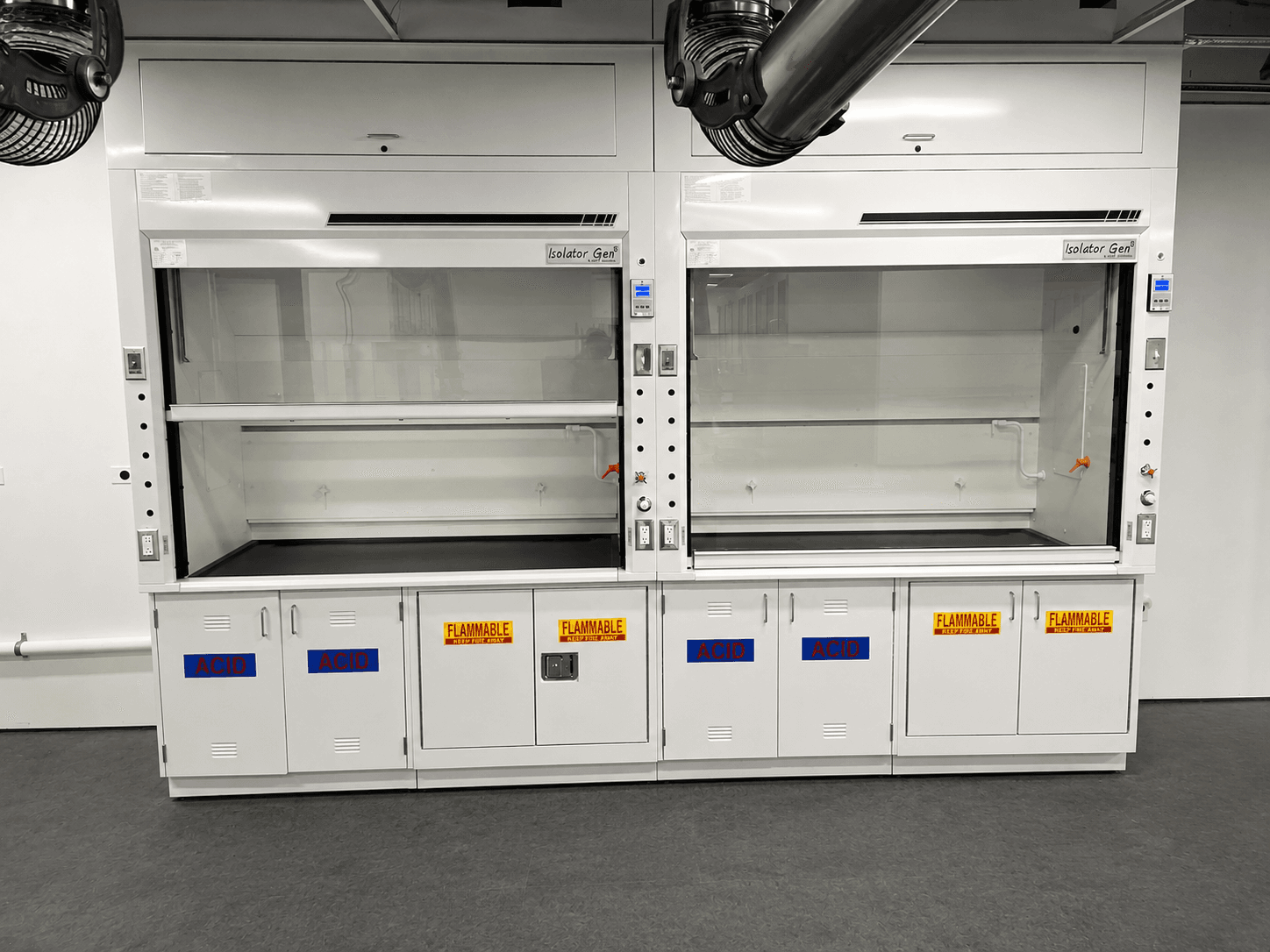
A fume hood on a quote sheet is rarely just a hood. The accessories decide how the hood is plumbed, how people work at it, what gets stored underneath, and how easy it is to service in ten years. Most of them are far cheaper to specify now than to retrofit later.
Here is the short list worth settling before an order goes out.
Sash styles
The sash is the moving glass at the front, and the part users touch every day. Most hoods in the F-Series are offered in four styles:
- Frameless vertical — slides up and down, clearest view into the hood.
- Framed vertical — the same motion with a framed panel.
- Horizontal — panels slide side to side, so a user can work behind a panel.
- Combination — horizontal panels inside a vertical-rising frame, giving both kinds of access.
Pick based on how equipment gets loaded in and how people work once it is set up. The answers are often different, which is what combination sashes are for.
Service fixtures
Hoods are ordered with plumbing, electrical, and service fixture packages — gas, air, vacuum, water, and receptacles mounted where the work actually happens. Decide the fixture list and side before fabrication; cutting a liner later is not a field job. Our laboratory plumbing and gas fixtures page covers the fixture types that get coordinated into hoods and benches.
What goes under the hood
The base cabinet is an accessory decision with safety consequences. Common choices from our free standing and safety cabinets:
- Flammable storage cabinets for solvents kept near the point of use. Depending on configuration these include labeled doors, a liquid-tight bottom pan, vent openings with spark screens, grounding provisions, and door options such as self-closing or three-point latching.
- Acid storage cabinets with chemical-resistant interior liners, coved corners, a front containment lip, and a phenolic shelf.
- Vacuum pump cabinets that house the pump with sound-deadening material, cart options, and ventilation coordination, instead of leaving it on the floor.
Work surface and liner
The work surface inside and around the hood is specified by chemistry, not by looks. Epoxy resin countertops and phenolic resin countertops cover most chemical work; stainless steel countertops suit cleanable and washdown environments. Radioisotope and perchloric acid hoods come with their own interiors and should not be mixed and matched.
Around the hood
Several accessories sit outside the hood but belong in the same conversation:
- Adjustable wall shelving and stacked reagent shelving to keep reagents off the bench and out of the airflow.
- Laboratory safety plumbing fixtures — eyewashes, drench hoses, and emergency showers whose placement has to stay clear once casework and hoods are installed.
- Fume extractors for a nearby task that needs capture at the source rather than a second hood.
- Airflow monitors and alarms, where the project calls for them. These tie into the exhaust and controls design, so raise them with your mechanical engineer early.
Accessories on hoods you already own
Accessory work is not limited to new hoods. Our Hood Enhancement Program covers sash system conversions, liner, baffle, and glass replacement, casework modifications, and integration of updated service fixtures on hoods already in service.
The fume hood and base cabinet options catalog (PDF) lists the available options, and the fume hood catalog (PDF) covers the hoods themselves. If you would rather work through it with someone, contact us with the hood model and what you run in it.